UP AIT and Lake Sebu Celebrate T’boli Living Heritage in Pagbabahagi

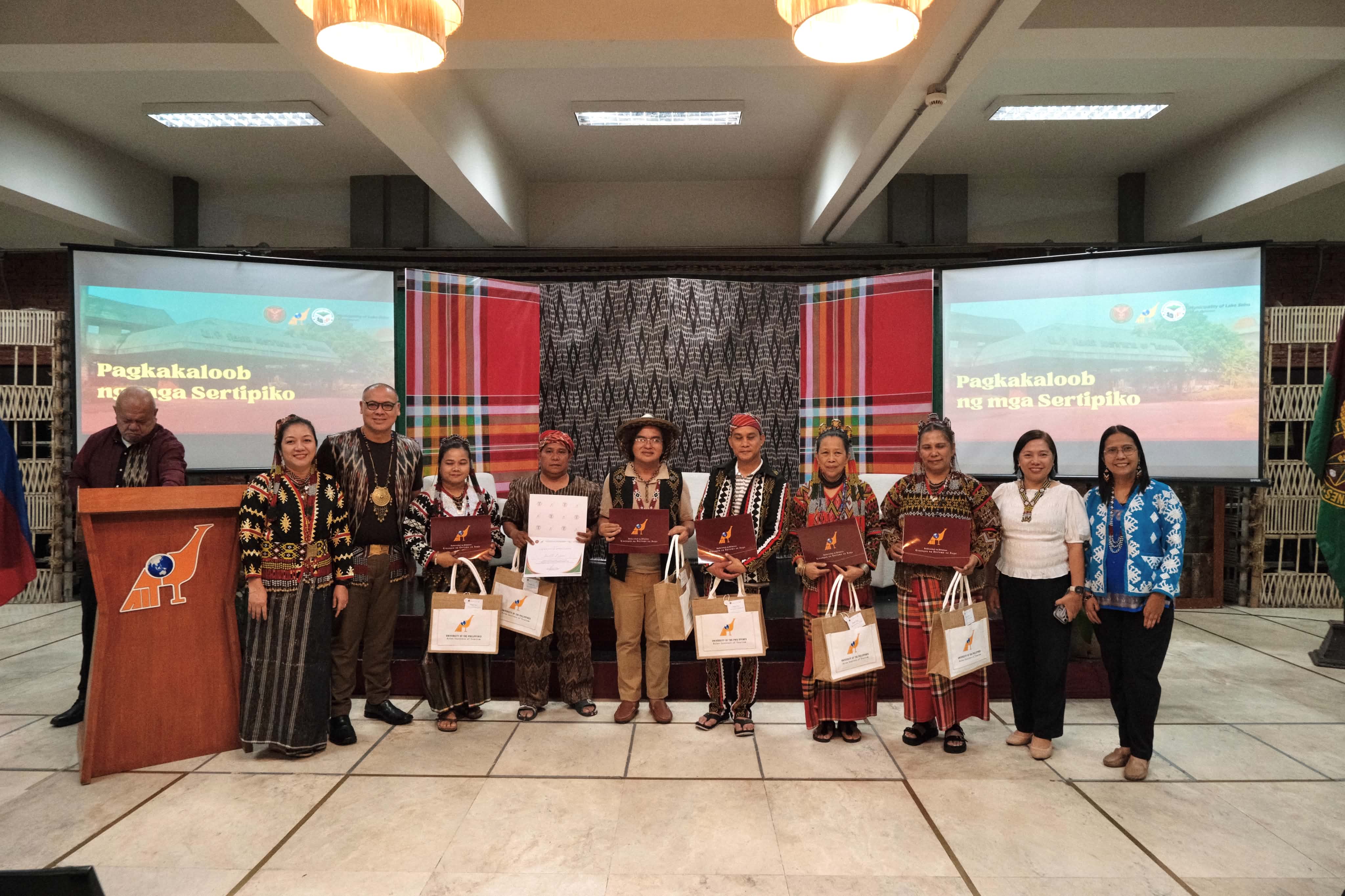
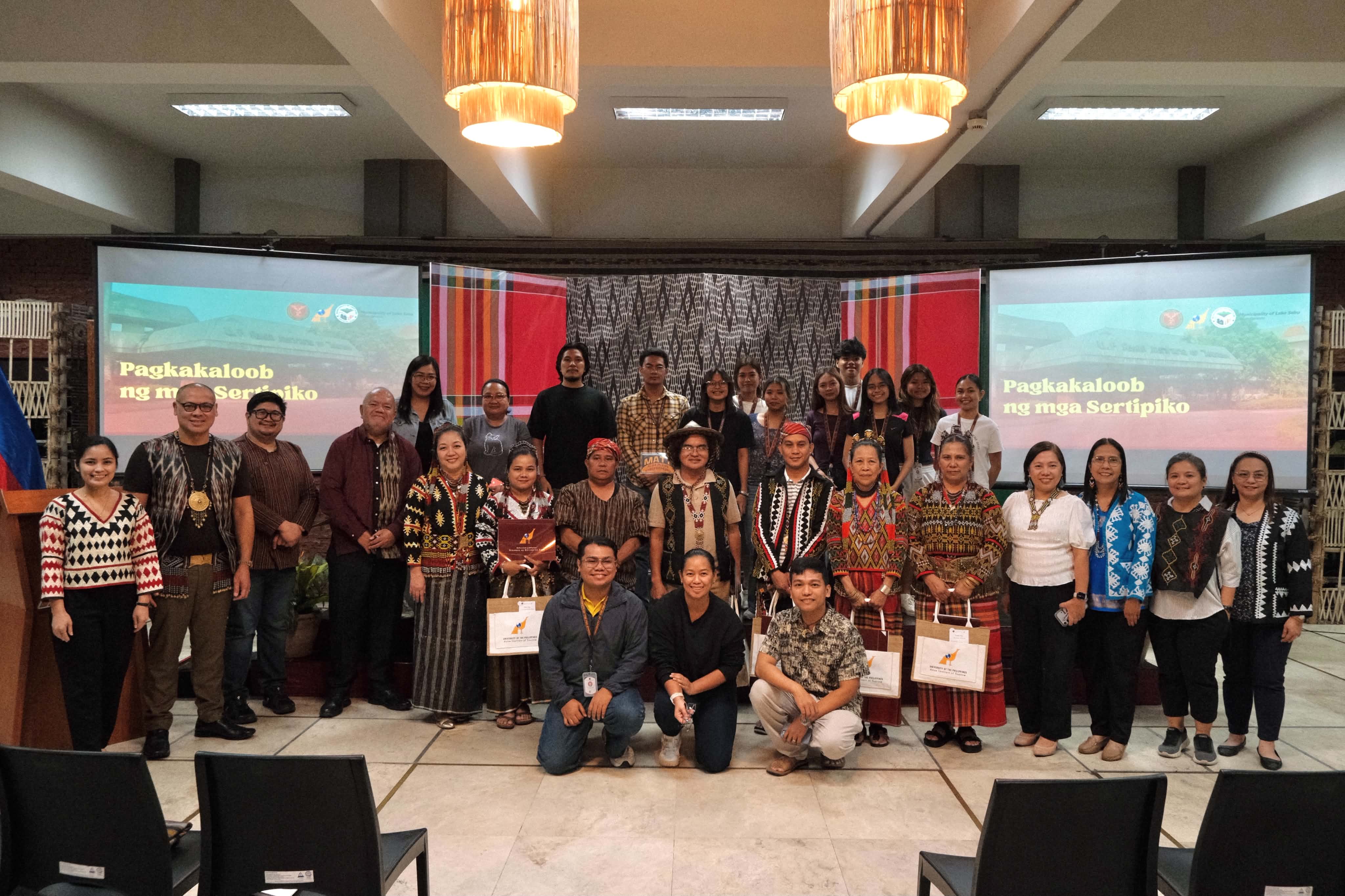
In celebration of Indigenous Peoples’ Month 2026, the UP Asian Institute of Tourism (UP AIT), in partnership with the Local Government Unit of Lake Sebu, South Cotabato, held Pagbabahagi: Tradisyon, Kultura, at Turismo ng Pamanang T’boli on October 14, 2026 at the UP AIT Lounge.

Pagbabahagi was conceived as a space for the T’boli community to share and celebrate their traditions, culture, and tourism in their own voice. For tourism students, the event offered a firsthand look at how heritage and tourism can work together, and at the role of indigenous tourism as a strategy for sustainable development.

Tourism as a meeting point of identity, rights, and heritage

Opening the program, UP AIT Dean Giovanni Francis Legaspi challenged the audience to look beyond the conventional view of tourism. In the context of Indigenous Peoples and Indigenous Cultural Communities (ICCs), tourism is a space where a community’s identity, rights, and heritage meet the policies, representations, and development agendas that shape them.

Dean Legaspi encouraged participants to critically examine the social, environmental, and cultural dimensions of tourism as it relates to Indigenous Peoples. He framed the afternoon around living heritage: the rituals, performing arts, crafts, and indigenous knowledge systems that the community actively sustains and passes down from one generation to the next. 

Voices from Lake Sebu

The learning session featured three presentations from members of the T’boli community and the Lake Sebu LGU.

Culture bearer Maria Todi opened with T’boli Spirituality and T’nalak: Culture, Meaning and Identity, discussing the sacred and cultural significance of the t’nalak, the T’boli’s renowned abaca cloth, and its place in T’boli spirituality and identity.

Nenita Kinan of the Lake Sebu Tourism Office followed with Preserving T’boli Indigenous Knowledge Systems and Practices, highlighting efforts to safeguard the community’s knowledge and the relationship between culture and local government in tourism planning.

Michael Yambok, Tourism Operations Officer of Lake Sebu, then presented T’boli Lifeways and Performing Arts, introducing the everyday practices and artistic traditions that continue to define T’boli life.

Critical questions for tourism

The presentations prompted reflection on questions central to the study of indigenous tourism. When a sacred practice becomes a souvenir or an attraction, who has the right to decide how it is presented and sold? How can indigenous knowledge be protected against misuse, commercialization, or loss? And how can it be ensured that the community remains the steward and decision-maker over its own heritage?

The discussions also drew attention to the partnership between culture bearers and local government, and to how communities can be meaningfully included in tourism planning. These themes were taken up further in an open forum, where students and guests engaged the speakers directly.

Heritage in motion

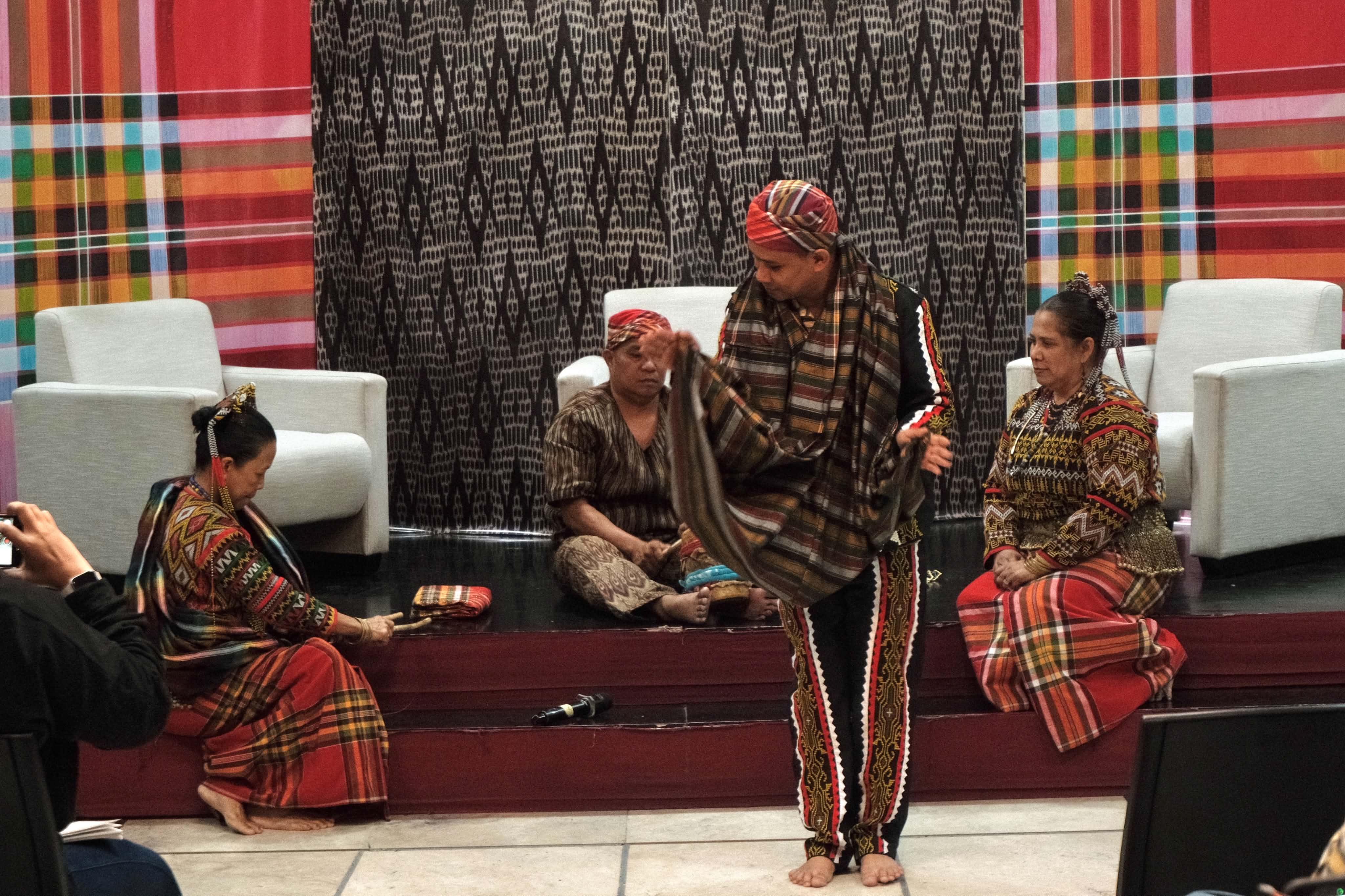
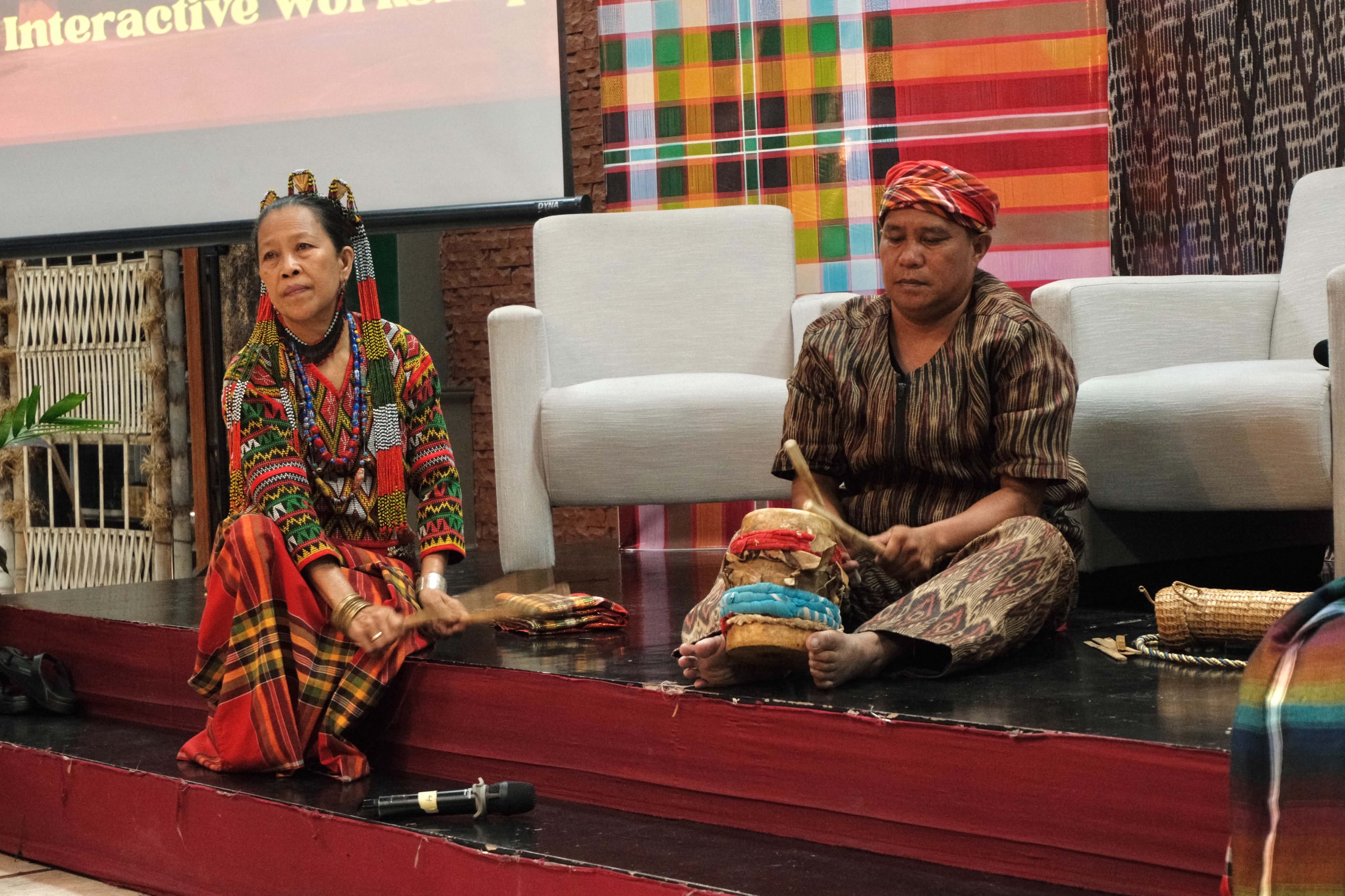
Following the talks, participants engaged with T’boli living heritage through an interactive workshop on T’boli music and dance. As the program emphasized, dance and music are not mere ornaments. They are the language of the community and a way of passing culture on to the next generation.

The afternoon culminated in a community dance, with students, faculty, and guests joining the T’boli performers, followed by the a message of appreciation from the Dr. Jennifer Tupas, Lake Sebu Municipal Tourism Officer.

In his closing remarks, Co-Chair of the UP Diliman Culture Bearers-in-Residence Program Dr. Sir Anril Tiatco affirmed that the knowledge of Indigenous Peoples is a legitimate source of knowledge. He described gatherings such as Pagbabahagi as platforms where IP advocacies can be heard, and where hegemonic and inaccurate narratives about Indigenous Peoples can be challenged and resisted.

Through Pagbabahagi, UP AIT and the Municipality of Lake Sebu reaffirmed a shared commitment to tourism that honors indigenous communities as the storytellers of their own heritage.
    No Tags Available.

Frequently Asked Questions

Have a question in mind? We listed down some of the Frequently Asked Questions to help and guide you. If you have further questions not covered in this FAQ, please send us an inquiry through daa.ait@up.edu.ph

FAQS

How to apply in the BS Tourism Program? To be eligible in the BS Tourism Program, you need to pass the UP College Admission (UPCA)/UP College Admission Test UPCAT). For students who are planning to shift or transfer to the BS Tourism program, you must have completed 30 units of coursework (if you are from other UPD units or other UP campus) or 33 units of coursework (if you are from other college and university)

The documentary requirements can be found here. For more information and other queries, send an email with your concern to asianinstituteoftourism.upd@up.edu.ph

Are there scholarship offerings for UPAIT students? The graduate program of UPAIT offers the MSTDM scholarship award, with one awardee annually. For other scholarship opportunities for BS Tourism and Graduate Program, visit the UP Diliman Office of Scholarships and Grants Facebook Page: https://www.facebook.com/UPDilimanOSG

The UP AIT Alumni Association also offers an educational assistance in cash to deserving third and fourth year students.

UP AIT offers the Graduate Diploma in Tourism Development and Management (GDip TDM) which leads to the degree of Master of Science in Tourism Development and Management (MSTDM).

The graduate program courses are listed here. You may also view the description of courses here If you would like to know more about the subjects, please send us an e-mail.

All tourism and non-tourism graduates, with at least 1-year work experience and who would like to obtain a diploma and/or an advance degree in the field of tourism management and development may apply.

The list of requirements and downloadable application forms can be found in this page.

Yes, applicants whose work experiences are non-tourism related are welcome to apply. However, all applications will be assessed based on results of entrance examination, interview, academic performance, essay, and recommendations.

At present, UP AIT does not accept shiftees for the Graduate Program. Courses/Subjects taken in other colleges or universities will not be credited for the completion of the GDipTDM and MSTDM.

The entrance exam uses different types of questions that aim to assess your current knowledge, comprehension, logic, and analytical skills. Advanced knowledge of tourism is not required.

The application process is conducted online. Please ensure that you have read and understood the program details before submitting your application here. Once you have completed the application requirements, you can now proceed to submit your application.

For questions or concerns, please contact the Graduate Program office at aitgradprog.upd@up.edu.ph

The UPAIT Graduate Program is intended to meet the professional development needs of graduates to advance their careers in the tourism industry. Thus the UPAIT Graduate Program as much as practicable will offer weekday evenings (5:00 PM onwards) and Saturday classes (scheduled between 8 AM – 7 PM).

Graduate students are advised to take 9 units to get full load credit per semester or an equivalent of 2 – 3 classes per semester depending on the course credit units.

All students enrolled in the Graduate Program of UP AIT need to take a total of 21 units of required and elective Courses, which will allow the completion of a Graduate Diploma. Should the student want to advance to a Master’s Degree, the student needs to take 16 or 19 more units depending on the track they choose; Plan A is a thesis track with 19 units or Plan B, a non-thesis track with 16 units.

Full-time GDipTDM students, taking a normal load, may complete the degree in three semesters (approximately 1.5 years). The time limit for the completion of all diploma requirements shall be no more than two (2) years starting from the student’s first enrollment in the course and shall include all leaves of absence from the program.

If GDipTDM graduates choose to continue to MSTDM, you must complete an additional 19 units (Plan A, thesis track) or 16 units (Plan B, non-thesis track), which may be taken in two semesters and one mid-year term. The time limit for the completion of the Master’s requirements shall be three (3) years, starting from the student’s first enrollment in the course and shall include all leaves of absence from the program.

Yes. There will be time limit of 2 years from enrollment for the GDipTDM, and a time limit of 3 years for MSTDM, maximum years to finish is 5 years.

The cost per unit is Php 2,000 and the estimated cost of tuition fees for full load per semester is around Php 20,000 – 25,000.

Students and prospective applicants are requested to search for available grants or scholarships at the University of the Philippines Office of Scholarships and Student Services.

For list of available scholarships visit the website of the University of the Philippines Office of Student Scholarships.

Contact Us

Get in touch

Please ensure to schedule and coordinate your visit in advance before proceeding to our campus.

Location:

UP Asian Institute of Tourism, Commonwealth Avenue, Diliman, Quezon City 1101

Email:

asianinstituteoftourism.upd@up.edu.ph

Call:

(+63 2) 8 981 8500 extension #2798

AIT Directory:

Visit here

Loading
Your message has been sent. Thank you!